
Managing anxiety: What’s happening and what can I do to help myself?
Anxiety can manifest in so many ways. Most of us will resonate with the stomach clenching feelings facing a presentation, a first date or job interview.
Words might stumble out as your heartbeat gallops. You might be clenching and releasing clammy hands, fighting to steady shallow breaths, and trying to counter a mouth suddenly devoid of all moisture whilst desperately assuring yourself and others that you’re fine.
This type of anxiety response is a physiologically normal as response to stressful situations. We can utilise the knowledge that we were fine before when faced with other stressful situations. Perhaps we can draw on previously successful strategies and steady ourselves enough to move forward without too much of a hiccup. This pattern builds trust and confidence that the anxious thoughts, feelings, and sensations will be manageable, and we can navigate through them.
Occasional anxiety is a normal stress response. You might consider therapeutic support if anxiety is:
Persistent
Without obvious cause
Excessive
Interfering with day-to-day life
Preventing sleeping, eating, rest or professional and social connections
Anxiety may be an issue for you if it’s overwhelming, constant, or out of proportion to the situation. Fear is normal too; it’s a response to a threat or perceived threat. All five senses tend to be involved to trigger a, immediate, automatic survival response. Anxiety is a physiological, psychological, and emotional response to perceived threat or past experiences.
It makes sense, it isn’t silly or unsubstantiated.
Anxiety often isn’t sometime to just ‘push through’ or ‘think positively.’ If you’ve experienced it, you’ll know how unhelpful it can be when you’re told by yourself, or someone else to “Just calm down!”. If only it were that simple!
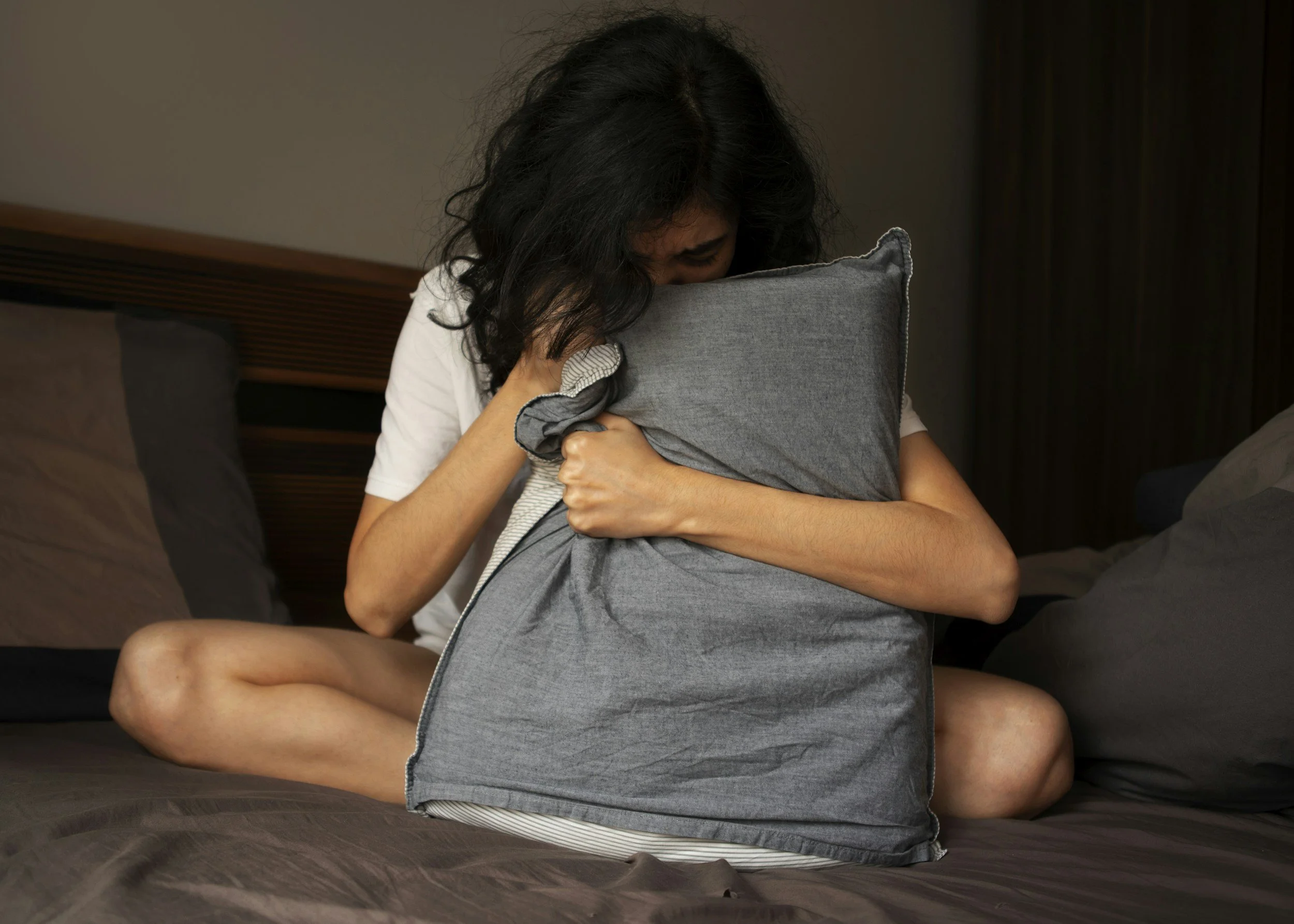
Anxiety can be debilitating, stressful and impact your day to day life. How to manage anxiety and improve your mental health.
Common forms of anxiety include:
Generalised anxiety
Social anxiety
Panic attacks
Health anxiety
Phobias including agoraphobia
Selective mutism
Symptoms of anxiety can include:
Uneasiness
Looping thoughts about issues
Frequent rehearsing conversations and interactions ahead of time
Panic
Trouble sleeping
Difficulty resting or being still
Cold, sweaty, tingling hands or feet
Breathing changes
Increased heart rate
Dry mouth
Dizziness and feeling weak
Difficulties with concentration
Fears and avoidance of reminders, objects, places
Catastrophic thinking
Racing thoughts
Hypervigilance
Irritability
Fear
Overwhelm
What’s happening when anxiety takes over?
The brain perceives danger and activates an automatic survival response.
This Fight or Flight response is wired into our nervous systems to protect us from danger.
Fight – anger, frustration and defensiveness.
Flight – urge to leave or avoid.
Freeze/Flop – Feeling stuck, paralysed in place, dissociated or sleepy.
Fawn – Compliance as survival.
In the brain, the amygdala overrides the more rational frontal lobe to rapidly release adrenaline and cortisol. This prevents us from wasting time considering our next moves when a fast response is needed.
If you’ve ever found yourself shocked and breathing fast after dodging a car or catching another person falling whilst your brain catches up to what has just happened that is this response in action.
There are some brilliant resources to understand what is happening in depth, I can’t do justice to these, so I’ll keep my explanation brief:
The amygdala is a processing centre, scanning for threat. Perception of danger here signals the hypothalamus to activate the sympathetic nervous system.
Overriding the prefrontal cortex reduces rational thought to facilitate action over contemplation when speed might be life or death. It does mean anxiousness can make it difficult for us to be logical, rational, and composed.
Our attention is now primed to scan for danger; this is where our senses are sharper and more vivid. Hypervigilance helps us detect danger earlier and gives greater opportunity to react, the flip side of this is that concentration and focus for other tasks is reduced.
If anxiety is chronic and persistent we can adapt with more sensitivity to the alarm (amygdala) and changes to the effectiveness of the prefrontal cortex (rational though and emotional regulation) and hippocampus (memory).

What’s happening when I have a panic attack or experience anxiety?
In the body:
Adrenaline and norepinephrine results in:
Fast heartbeat to optimise blood flow to muscles and vital organs.
Faster and more shallow breathing to take in more oxygen.
Braced muscles causing tension, trembling, or aches.
Disruption to digestion as other systems are prioritised.
Dilated pupils to adapt vision, sweating to cool the body ready for action and dry mouth.
What can I do about anxiety? How can I help myself with anxiety?
Build awareness.
It can help to learn more about what’s happening for you, as rational and logical thoughts may be less accessible in the moment.
Some helpful awareness might include:
What happened?
What thoughts were coming up?
What sensations were you feeling?
What emotions did you notice?
How did you respond?
What happened after the anxious time? How did you manage it? What helped and what didn’t?
What can I do about it?
As logical and rational thoughts may be harder to utilise, we can try to lead with strategies to demonstrate the threat is over. Some techniques to try:
Breathing techniques.
There are many ways to do this, though in essence steadying your breath and inhaling more deeply with a longer exhale will support your nervous system in regulation and calm.
Box breathing: Inhale for 4 seconds, hold for 4 seconds, exhale for 4 seconds, hold for 4 seconds. Repeat 1-3 minutes (Gentle, especially if you feel lightheaded.)
Using a pressure point (there’s one between the thumb and forefinger) or a tactile object to keep attention in the here and now and taking 3 to 5 steady breaths can help. This can also work with a strong, preferably pleasant to you, taste, or smell.
Grounding Techniques:
5-4-3-2-1 Model:
Identify aloud or consciously in your mind:
5 things you can see.
4 things you can feel.
3 things you can hear.
2 things you can smell.
1 thing you can taste.
If one or more senses aren’t available to you it’s fine to swap them out.
Another technique might be slowly noticing every tiny detail of your surrounding left to right, up and down. Be deliberately slow and detailed with it. It signals to your brain and body that you are safe (no need for hypervigilance). In fact, you’re so safe you have time to notice all the trivial things.
Progressive muscle relaxation:
This approach utilises the tension and priming of the muscles providing relief and movement.
Tense one muscle group at a time for 5-10 seconds, release for 10-15 seconds and move upwards from your feet to your head.
Quick reset techniques:
Interrupting the panic responses with a reset.
You could try – splashing cold water over your face, or against your inner wrists.
Hold an ice cube, keep holding it until it melts for a distraction alongside the activation.
Change your environment, step outside or into a calmer space if it is safe to do so.
You can try to manage anxious thoughts using CBT techniques.
If this type of management appeals to you perhaps seek a qualified CBT (Cognitive Behavioural Therapy) therapist.
You might challenge thoughts by asking yourself what the evidence is to support the fear. What evidence contradicts the anxious thought. Stepping into compassion by checking how you might support a friend experiencing similar. Trying to engage logic by noticing what outcomes are most realistic rather than which are most worrying.
Other ideas might be to try to build time in with intention to worry so you can also build time for reprieve from anxiousness.
General self help and care may also be of benefit as they provide stronger baselines to support you.
I know we all know about them already, some are easier said than done and some are boring but effective:
Sleep hygiene. Consistent bedtime, reducing screen time especially before bed, avoiding stimulants and caffeine, routines.
Movement and exercise if you are able.
Steady nutrition and moderation.
Routine including nervous system support such as morning sunlight, consistent waking times, Gentler transitions between tasks in the day, breaks, enjoyment and hobbies, social connections, and comfort.
Moving away from fighting with the anxiety, being angry and frustrated with yourself into self-compassion and acceptance can help to provide a base for techniques and strategies to be more effective. It can be difficult to move from “Why can’t I just get on with it!” or “Argh I’m so annoying, I always do this!” to something more like “I’m feeling frustrated with myself whilst I’m experiencing anxiety.”, “ it makes sense why I am and I am taking steps to resolve it.”
Create an individualised plan and keep it somewhere to hand.
Save it on your phone or put a note in your desk drawer. Once you know what works for you having it written down somewhere might be useful in the moment when your memory and rational mind can be more difficult to access.

Anxiety is often manageable even if you’ve been coping with it for a long time.
If your anxiety is causing you distress or affecting you regularly it may be time to consider qualified therapeutic support. Anxiety management techniques often work better longer term if paired with counselling, psychotherapy or specialised therapy to guide you to process and resolve the underlying causes so you can move forward.
Over time using self help and/or therapy you can support your nervous system to respond to threat more proportionally then return back to a calm, regulated, and steady state.
